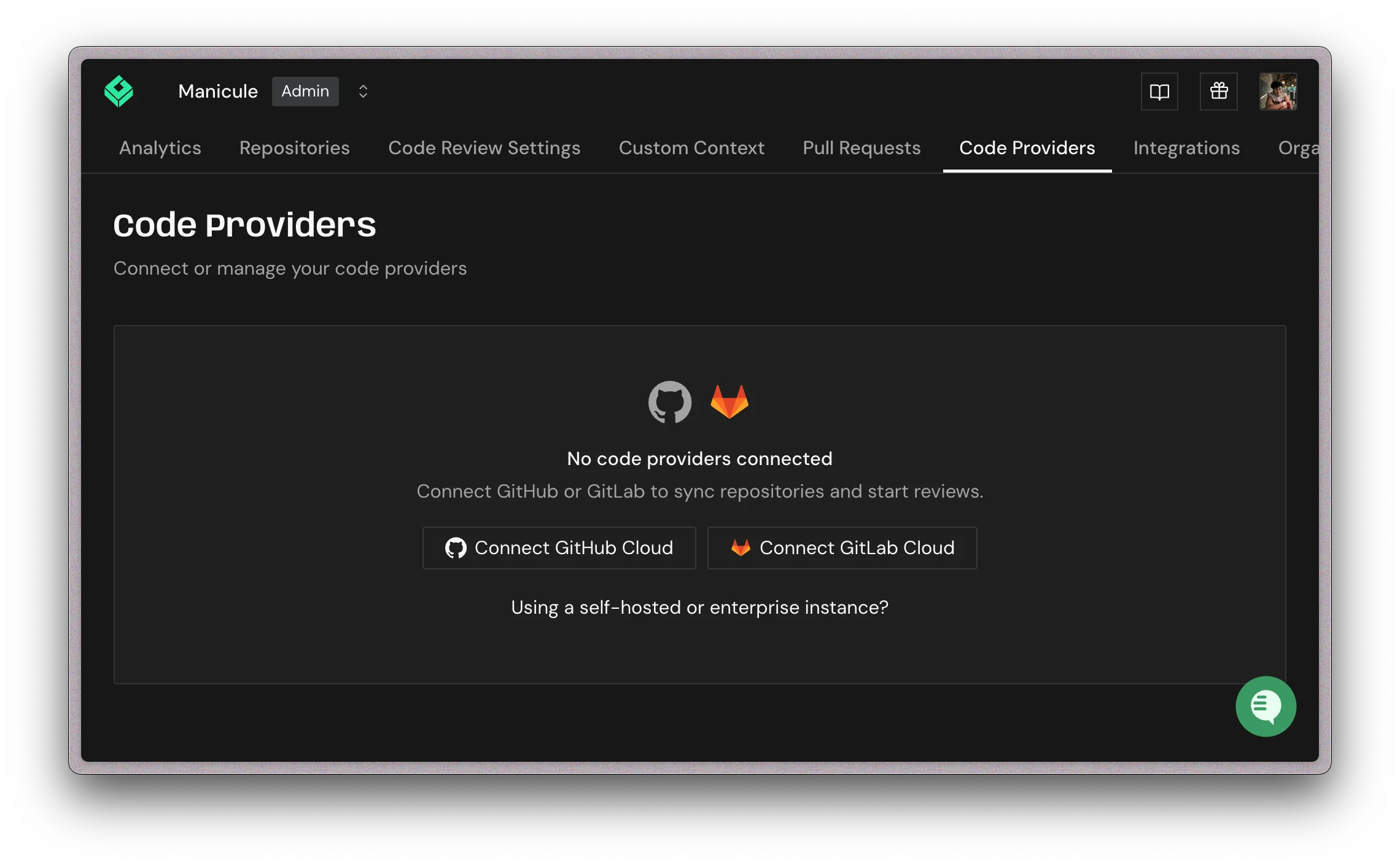
One org vs. multiple
One connected org or group — most workspaces look like this. The top-left breadcrumb shows your workspace name only. Use Organization Settings for members, billing, and providers. There is no Team Settings tab. Two or more connected orgs or groups — the breadcrumb showsWorkspace / team-name. Pick a team from the dropdown to switch context. Team Settings appears for team-specific member access.
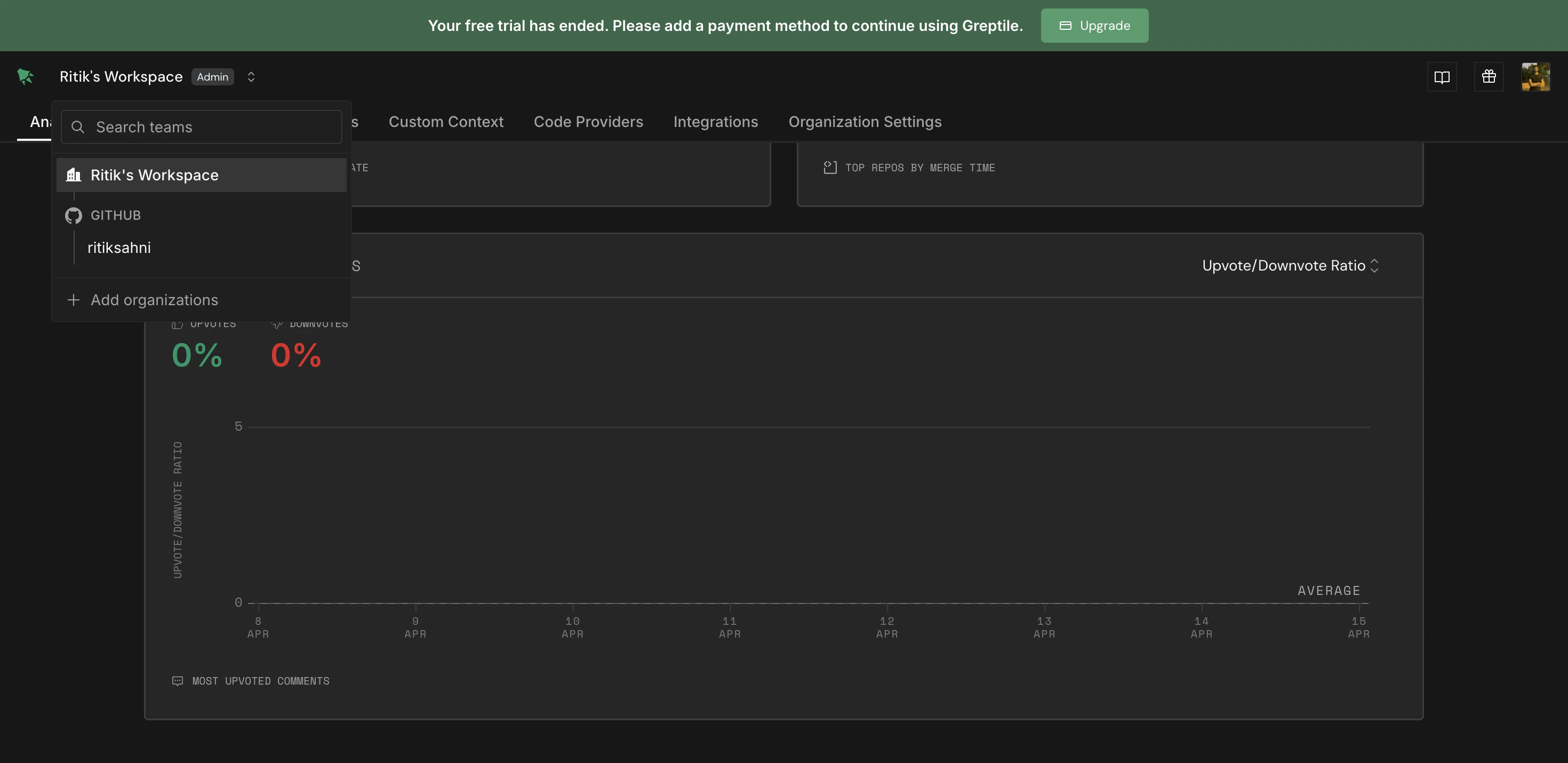
Steps below that mention Team Settings only apply when you have multiple teams connected. Otherwise, use Organization Settings.
Roles
Organization roles
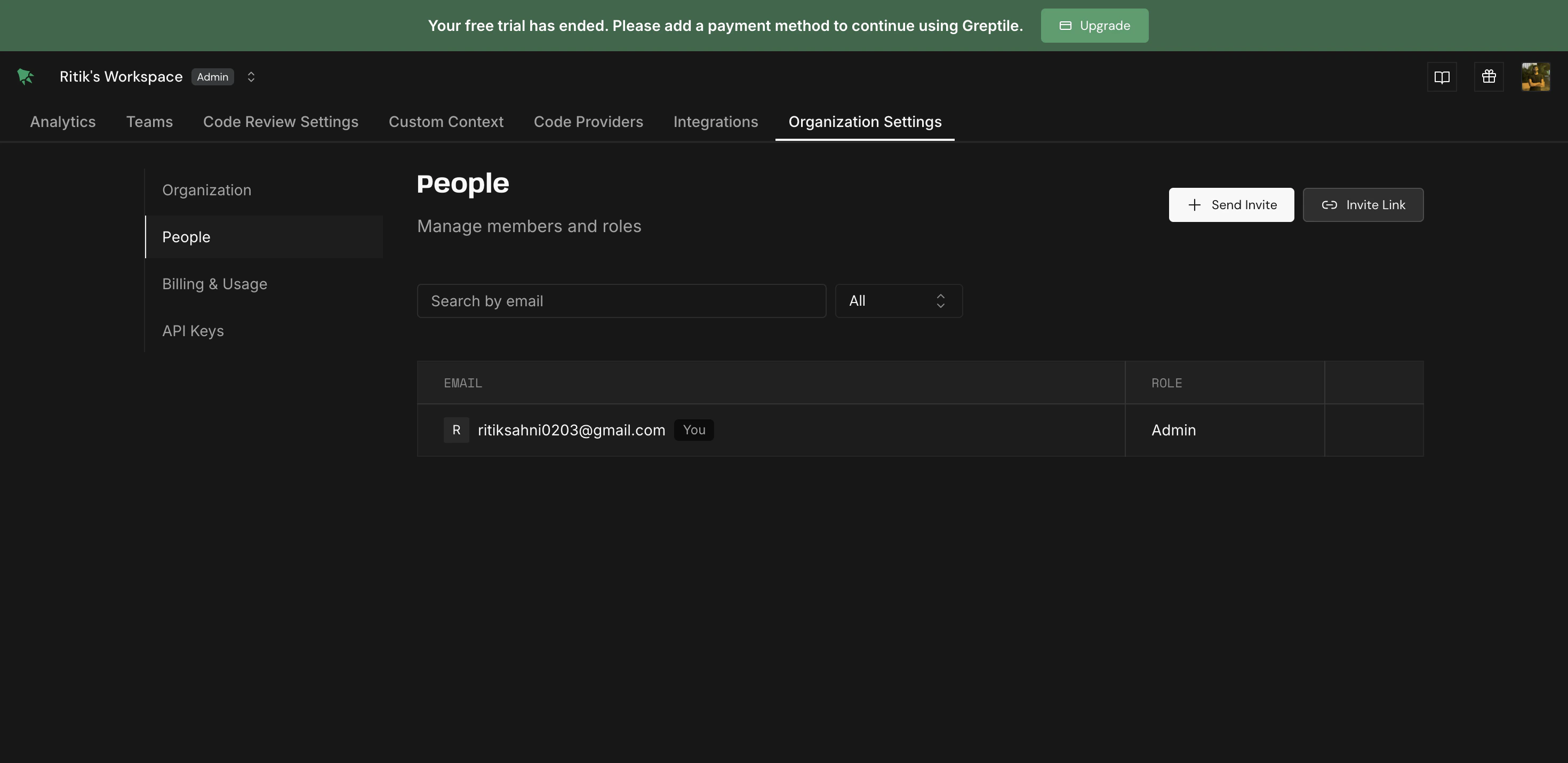
Set under Organization Settings → People.- Admin — Billing, members, code providers, integrations, and organization-wide review settings.
- Member — Day-to-day use: analytics, repos, pull requests, and custom context. Cannot change billing, providers, or org-wide settings.
Team roles
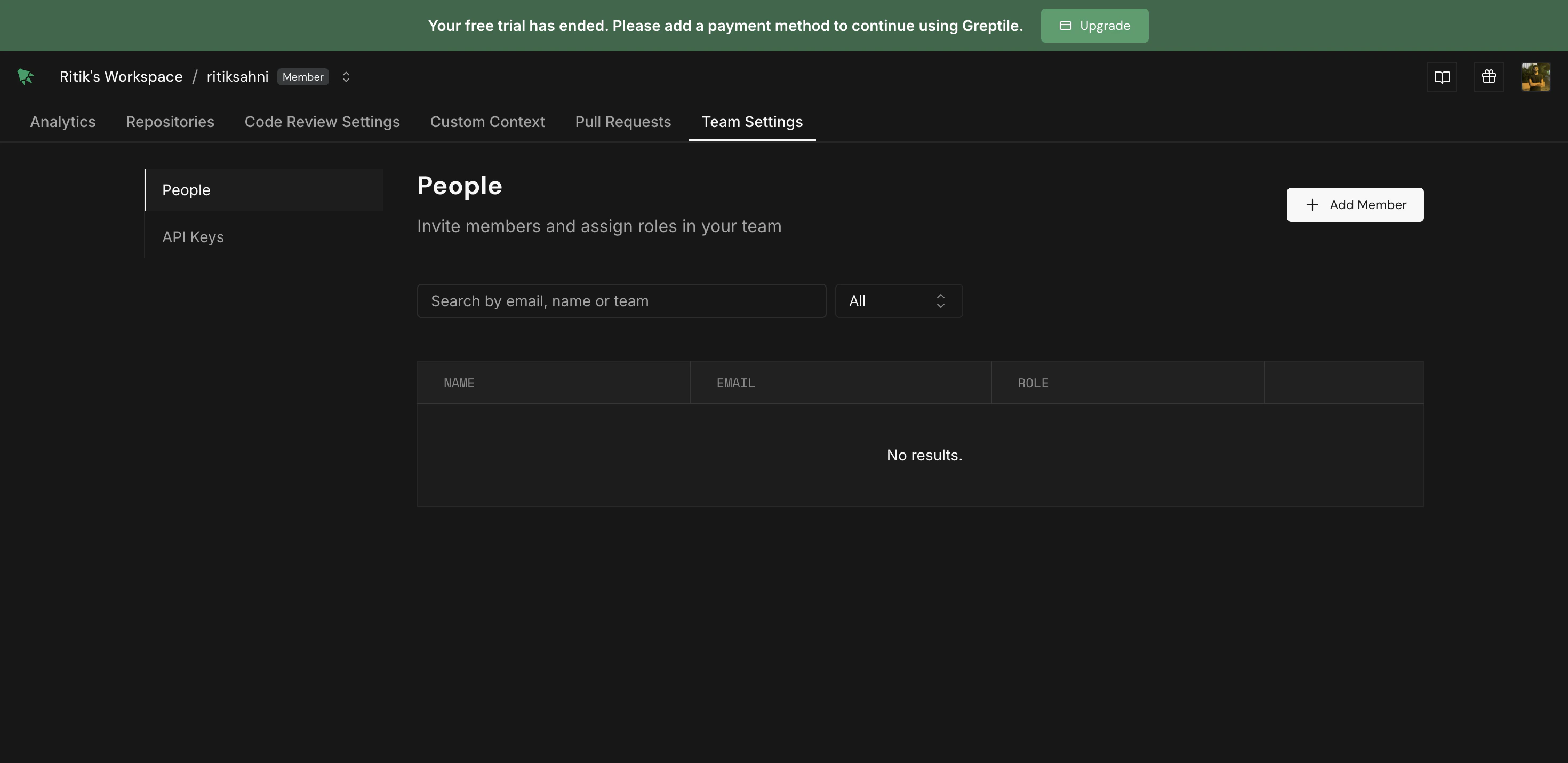
Only relevant with multiple teams connected. Set under Team Settings → People.- Admin — Manage members for that team. Cannot edit Code Review Settings (organization admins only).
- Member — View team repos, pull requests, and custom context; enable or disable repos for that team.
Adding members
To limit someone to a specific GitHub org or GitLab group, select that team in the breadcrumb, then open Team Settings → People.
Managing repositories
Open Repositories and click Manage Repos to enable or disable repos.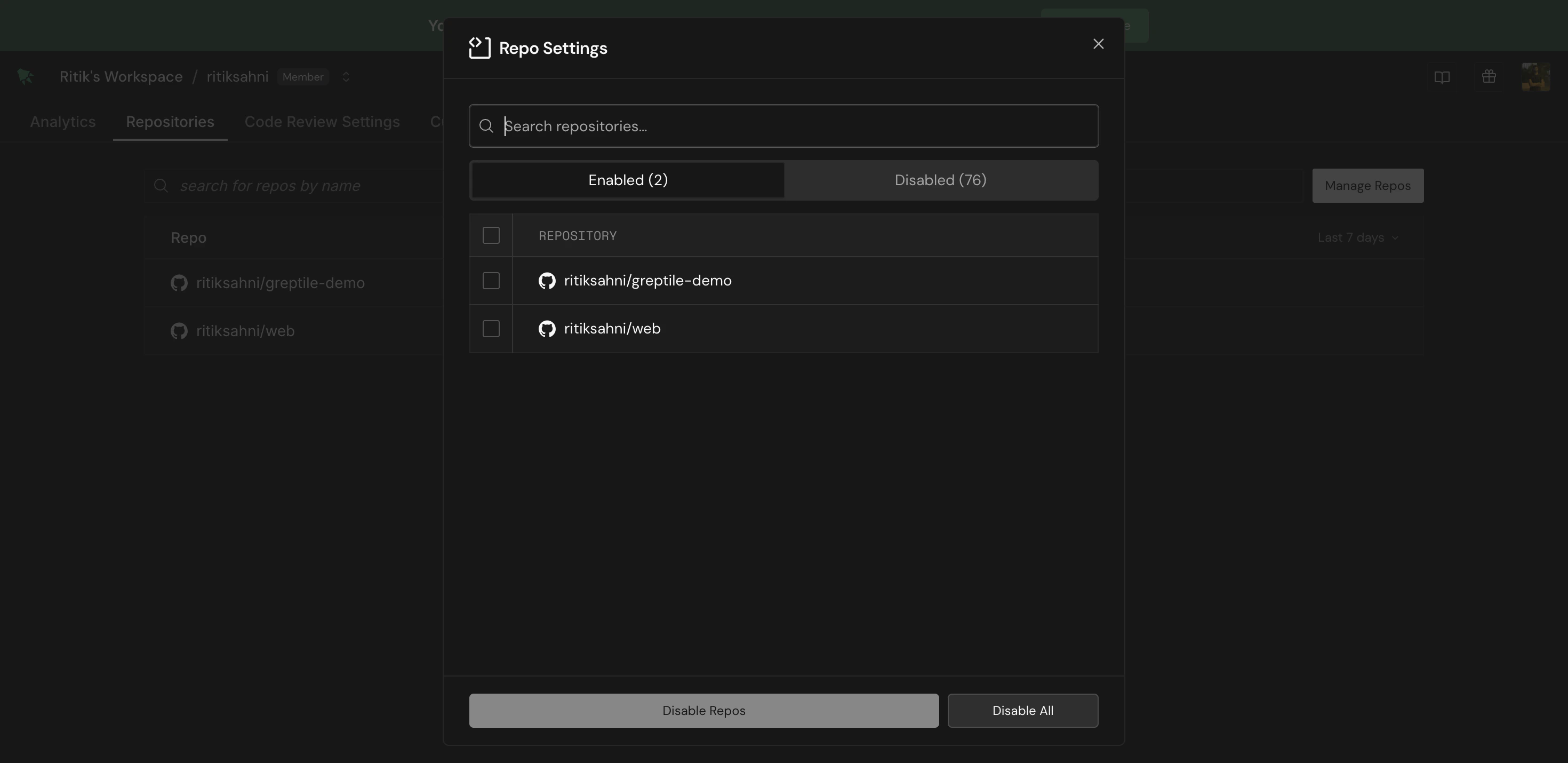
- Enabled — select repos and click Disable Repos or Disable All
- Disabled — select repos and click Enable Repos or Enable All
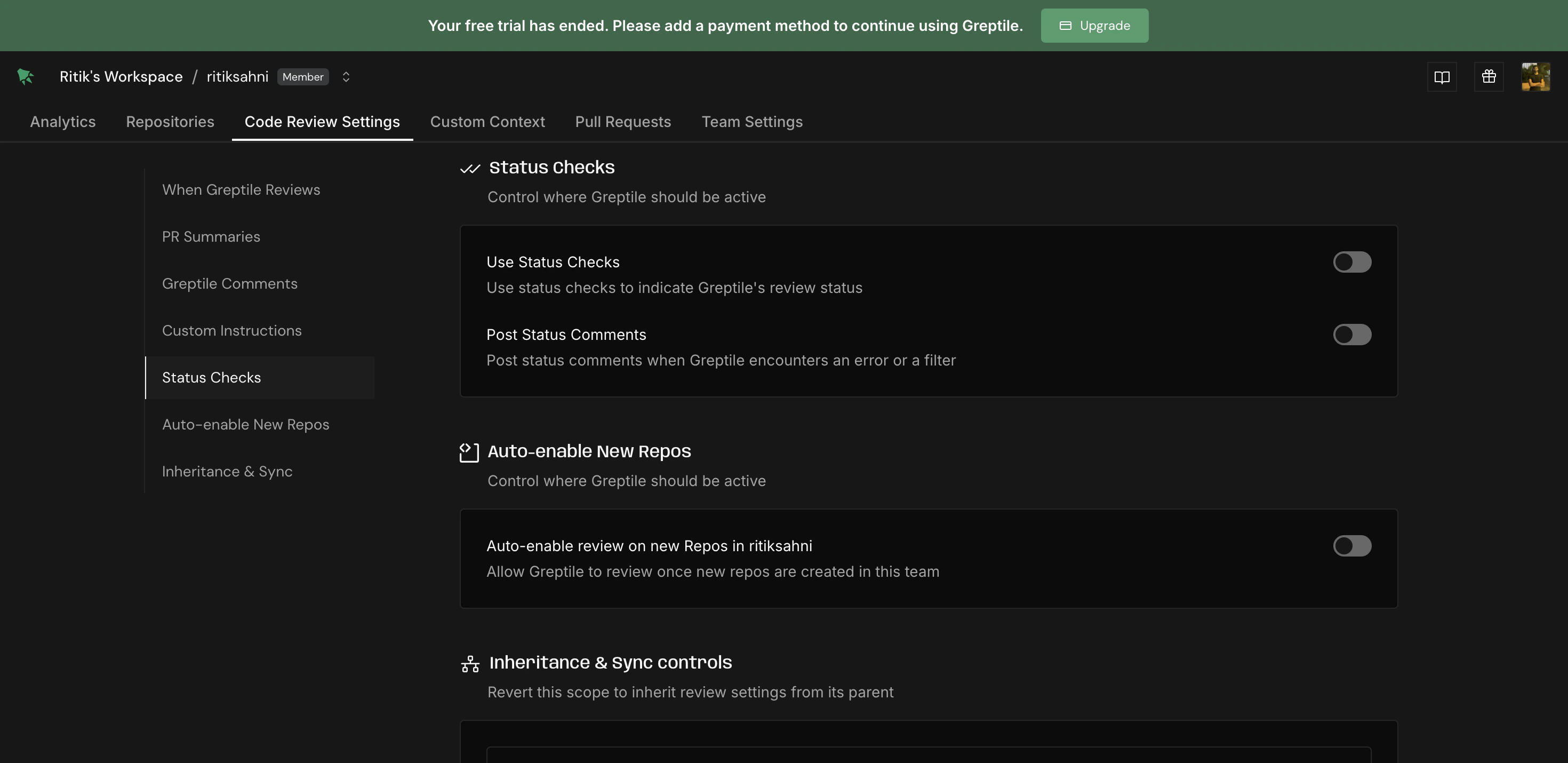
Auto-enable new repositories
- Go to Code Review Settings
- Scroll to Auto-enable New Repos
- Toggle on
Syncing settings across teams
With multiple teams, each team can inherit review settings from the organization. On a team’s Code Review Settings page, use Inheritance & Sync:- Sync from Parent — match organization defaults
- Sync Now — sync immediately (disabled when already in sync)
Onboarding for invited members
New members land in the org dashboard and are guided through Personal Settings → Review Settings:- Link GitHub or GitLab profile
- Install the bridge app
- Choose coding agents for Fix with your Agent
Members do not see Code Providers or Integrations — admins only.
Code providers
Admins connect GitHub or GitLab under Code Providers. Click Add Provider to connect more orgs or groups.